Field
Friday in Soura.
In Kashmir, blue-collar workers put their tools down on Friday. So that's the day our field team goes out. Notes from a mass onboarding drive at Jenab Sahib, Soura — a park, a masjid lawn, and a few dozen men deciding whether the app economy has room for them.
By Field Ops, HelpRush · 11 July 2026 · 4 min read
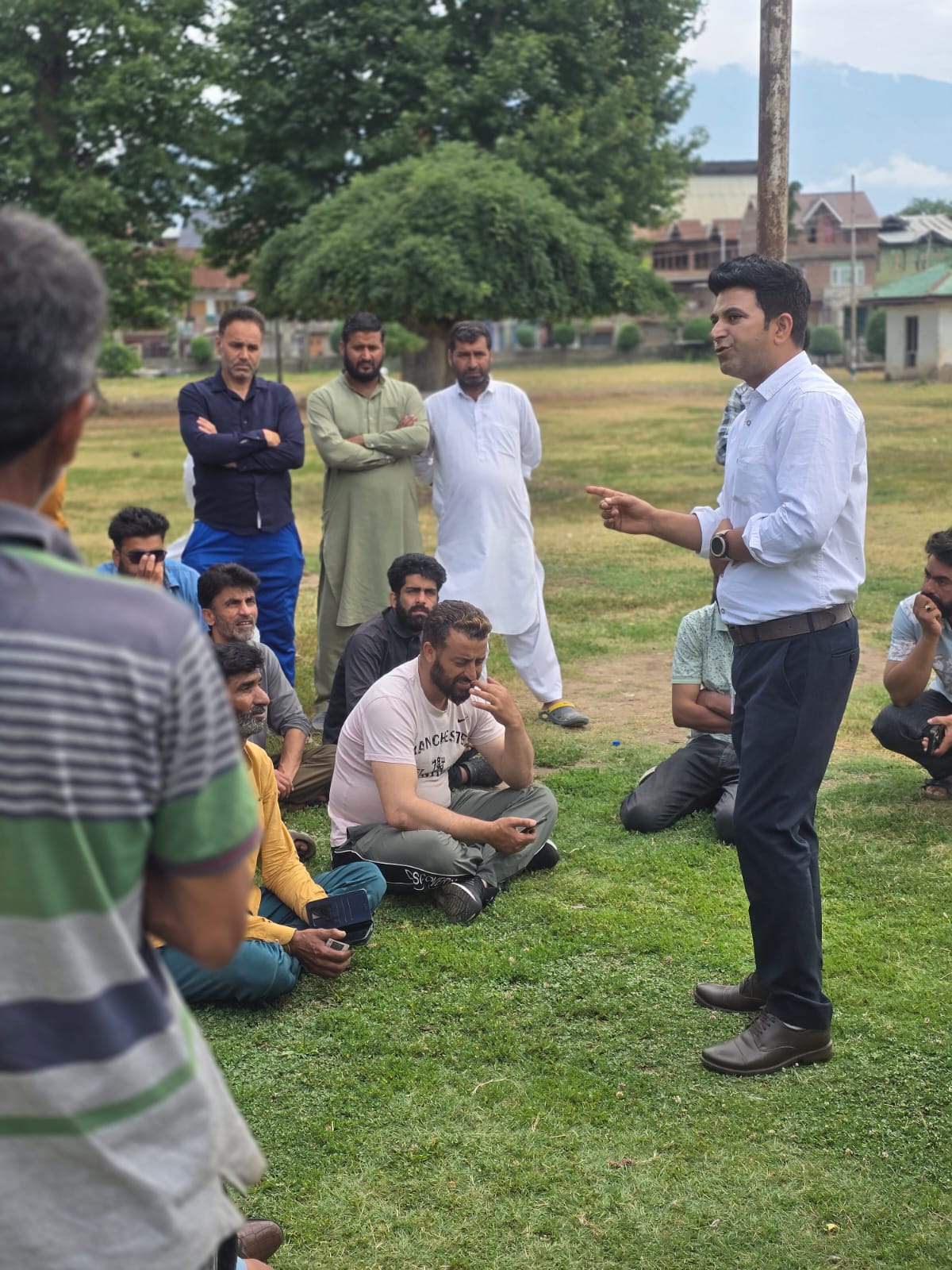
In Kashmir, Friday is the day the tools go quiet. Workshops shut by late morning, sites wind down, and the plumbers, electricians, carpenters, and masons who keep the city running head back to their own neighbourhoods — for prayers, for family, for the one unhurried afternoon of the week.
Which is exactly why, on Friday the 3rd of July, our onboarding team — headed by Showkat Kashkari — was on a lawn at Jenab Sahib in Soura, and not at a desk in Rangreth.
Why Friday, why the park
You cannot onboard a working tradesman on a Tuesday. He is on a ladder somewhere, or under a sink, or halfway across the city on a job that ran long. Ask him to come to an office during the week and you are asking him to give up a day's earnings to fill out forms. Most won't — and they'd be right not to.
So the field team flips it. Friday is the day the workforce is home, and after prayers it gathers in the same handful of places every week — the park, the lawn near the masjid, the shopfront corners of its own mohalla. That is where we set up. No banners, no stage. A team with phones and a folding table, wherever the men already are.
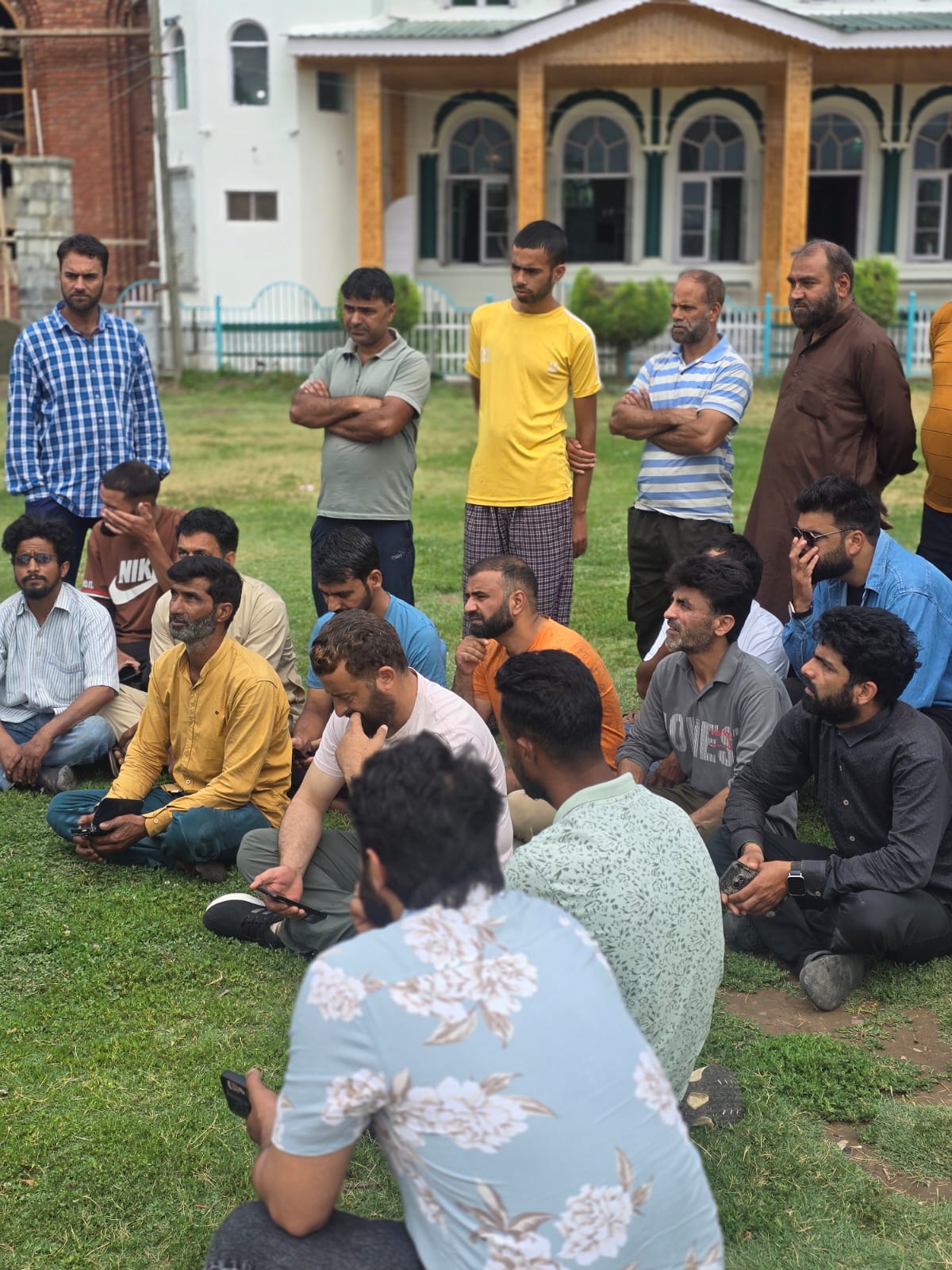
What an on-spot drive looks like
Showkat opens the way these sessions always open — not with the app, but with the work. Who here does electrical? Who does plumbing, painting, carpentry? How do you find customers today? The answers are the same across Srinagar: word of mouth, a cousin's phone number passed along, a contractor who takes a cut, weeks that are full followed by weeks that are empty.
Then the pitch, which is short, because the product is simple to say: customers file jobs on HelpRush, the platform dispatches the nearest verified pro, the money lands in your account. What takes time is not the pitch. It is the forty minutes of questions after it — about commissions, about what happens if a customer refuses to pay, about whether the ratings can be tampered with, about who to call when something goes wrong. These are men who have been burned by middlemen before. Scepticism is professional experience.
And then, for those who want in: onboarding on the spot. Aadhaar captured and verified on-device, the smart selfie, trade categories picked, service areas set. The men who came with documents walk off the lawn registered. The ones who didn't get a follow-up visit — the team takes names and comes back into the same lanes.
The part we refuse to skip
Most of the men on that lawn have never used an app for work. Some are first-time smartphone users. A signup without training would make them partners on paper and spectators in practice — technically on the platform, quietly afraid of it.
So every drive feeds into the same follow-up we wrote about in The kahwa classroom: small-batch, sit-on-the-floor sessions in the partner's own neighbourhood, one phone and one workflow at a time, until accepting a job stops feeling like a risk and starts feeling like a Tuesday.
“Most of these men can't use apps today. But the world is moving to apps — and I want them there, not left behind. Together we are building a new work future for Kashmir.”
The arithmetic of showing up
A Friday drive is not efficient. It costs a team its day off, it converts slower than an ad campaign, and it onboards people a growth dashboard would call expensive. It is also the only honest way to bring Kashmir's real workforce — the men who fix the city with their hands — onto the platform economy that is otherwise being built without them.
Soura was one Friday. There will be more — different park, different masjid lawn, same folding table. If your mohalla should be next, tell us.
Keep reading
Provider · 5 min read
The Super 30.
Thirty professionals in Srinagar have a five-star rating on every job they have ever completed, answer a job offer in under seven seconds, and reply to more than 85 percent of the offers they get. On Friday, 9 October, we brought them into the conference hall at Rangreth to honour them, finish their IDs, walk them through the Projects lane, and ask for one thing they could not give us. Notes from a long table.
Field · 4 min read
Friday at Pratap Park.
Every Friday our field team leaves the office and goes to wherever Srinagar's tradesmen are. On 4 September that was Pratap Park, on the Bund beside the Jhelum, with plumbers, masons, carpenters and technicians from across the city. They sat on the grass, learned the app one screen at a time, and walked out with an ID round the neck and a card that books them. Notes from the lawn.