Field
The kahwa classroom.
Most platforms expect partners to figure the app out on their own. We don't. Notes from a Saturday training in western Srinagar — kahwa, kulcha, a whiteboard, and seven trades.
By Field Ops, HelpRush · 28 April 2026 · 5 min read
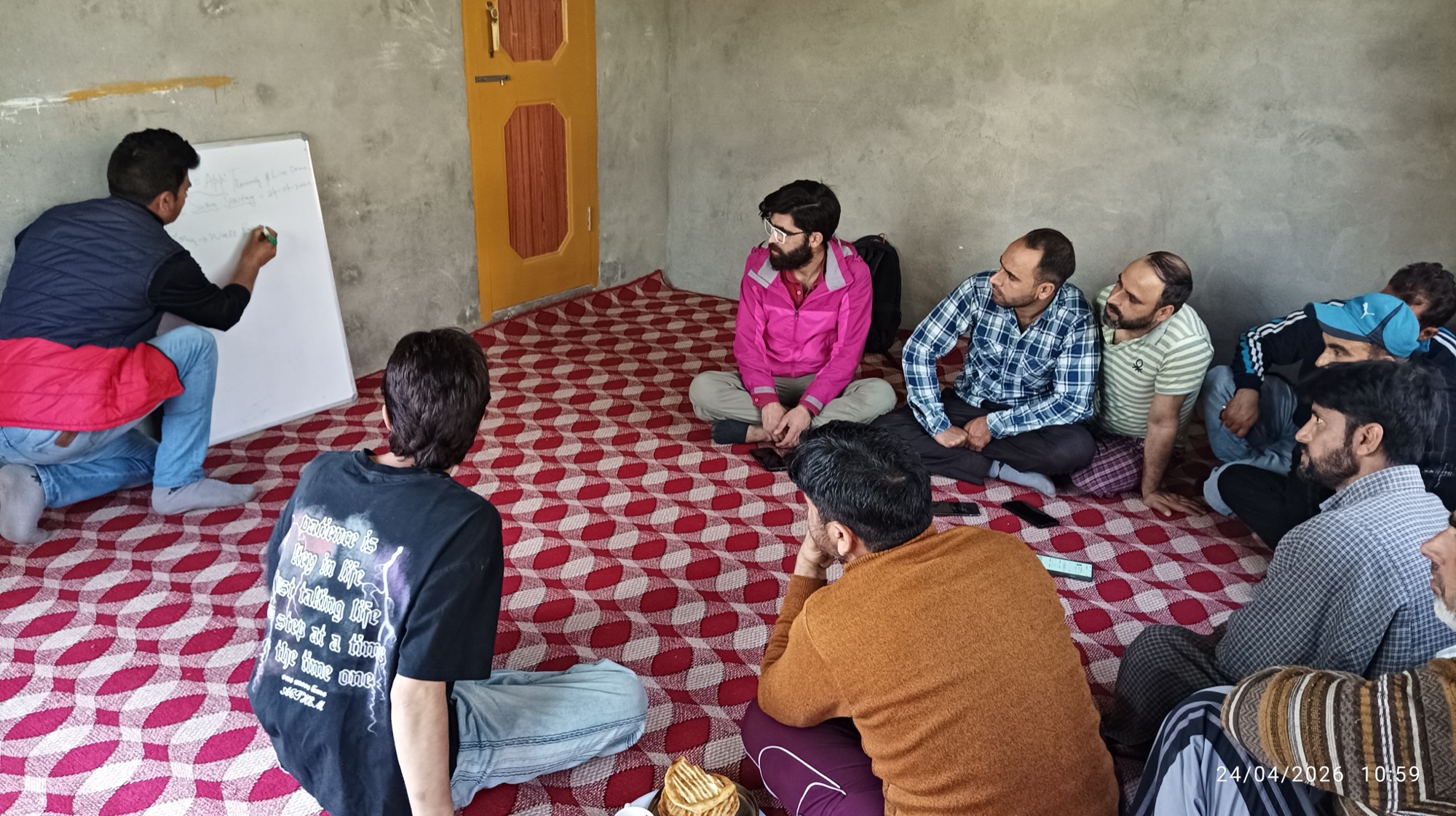
On a Saturday morning in late April our field-ops team drove out of Srinagar's city limits and into the lanes of Repore — one of the dense, low-rise neighbourhoods of western Srinagar where a large part of our partner base lives, works, and prays. They were carrying two whiteboards, a sleeve of markers, eight cups for kahwa, and a stack of warm chot kulcha from the bakery next door.
The mission for the morning was simple to state and harder to do: take seven partners — a carpenter, two electricians, a plumber, a painter, a mason, a locksmith — and walk them through, line by line, what to do when an order lands on their phone. How to accept it without losing it. How to start a job with the customer's start code. How to mark it complete with the end code. How to read a payout. How to withdraw it to their bank account.
The problem we are trying to solve
Indian platforms have a quiet bias. They are built for users who already know how apps work — who can read English at speed, navigate a multi-step flow without hesitation, recover gracefully when something goes wrong. The partner pool of the platform economy outside the metros doesn't always look like that. Many of our partners are first-time smartphone users. Some can read Urdu but not English. Some had not filled out a digital form before signing up with HelpRush.
The temptation, if you build for scale, is to leave them to YouTube tutorials and a help-desk number. That's how most platforms onboard. The result is a long tail of partners who are technically on the platform but emotionally not — uncertain about whether to accept an offer, unsure whether the money will actually arrive, slow to respond to a customer because they are quietly afraid of making a mistake.
That uncertainty has a customer-side cost. A pro who hesitates loses the job. A pro who doesn't trust the wallet doesn't take more jobs. The platform's promise to the customer — verified pro, dispatched in seconds — only holds if the partner at the other end is confident.
What we actually teach
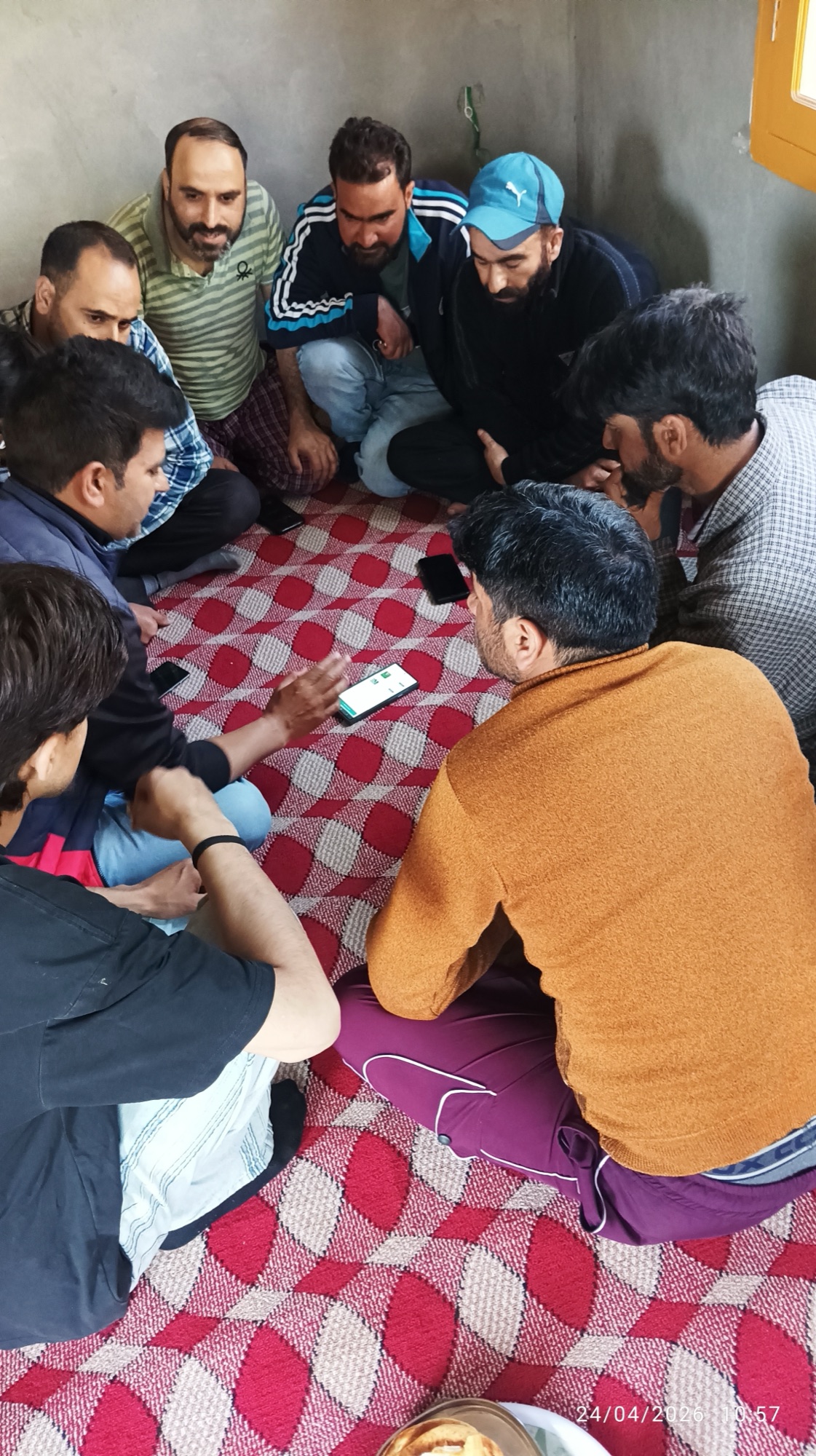
The training is one phone, one workflow, one partner at a time. The morning's agenda is on the whiteboard in the corner — App Training & Live Demo · Earnings & Withdrawal — and we work through it like a flight checklist:
How an order arrives on the phone. The taps to accept it before the offer expires. The customer's start code — where to find it, what to do if it's wrong, how to handle the case when the customer doesn't have one ready. The end code at completion. How to read your earnings page after a job is closed. How to add a bank account, a UPI handle, a wallet. How to withdraw — and what the withdrawal will look like in your bank statement two minutes later.
Then we run the same flow live. A colleague pretends to be a customer, books a job through the customer app two metres away, and the partner across the room accepts it on his phone. The order travels through the dispatch engine. He sees it arrive. He reads the address aloud. He taps Navigate; the map opens. He taps Start, then Complete. The earnings update on his screen. He taps Withdraw.
By the third practice run, hands stop hesitating. By the fifth, they begin to teach each other.
Why we go, instead of asking them to come
We could do this in our office in the centre of Srinagar. We'd save time. Some partners would come. Many wouldn't.
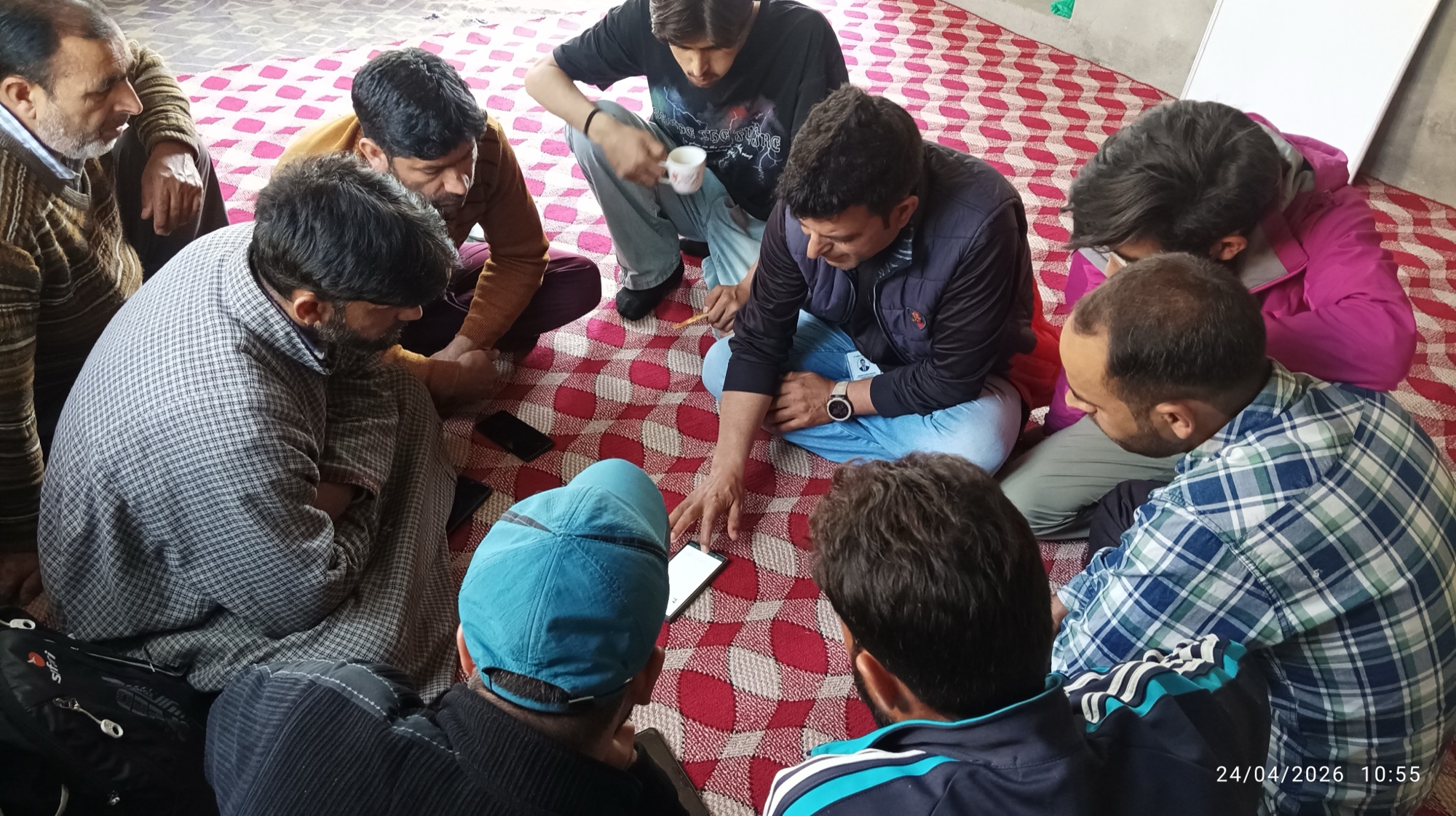
Going to a partner's village — sitting on his floor, drinking his kahwa, learning the names of his nephews — does something a city office never can. It tells him the platform takes him seriously. It bypasses the awkwardness of being the new guy in a glass-walled tech room. It demystifies the company. It builds the trust that makes the partner pick up the phone the next time we call.
“When the company comes to my house, the company is mine.”
None of this is the cheapest way to onboard. It is the way we have decided to onboard.
The kahwa is part of the protocol
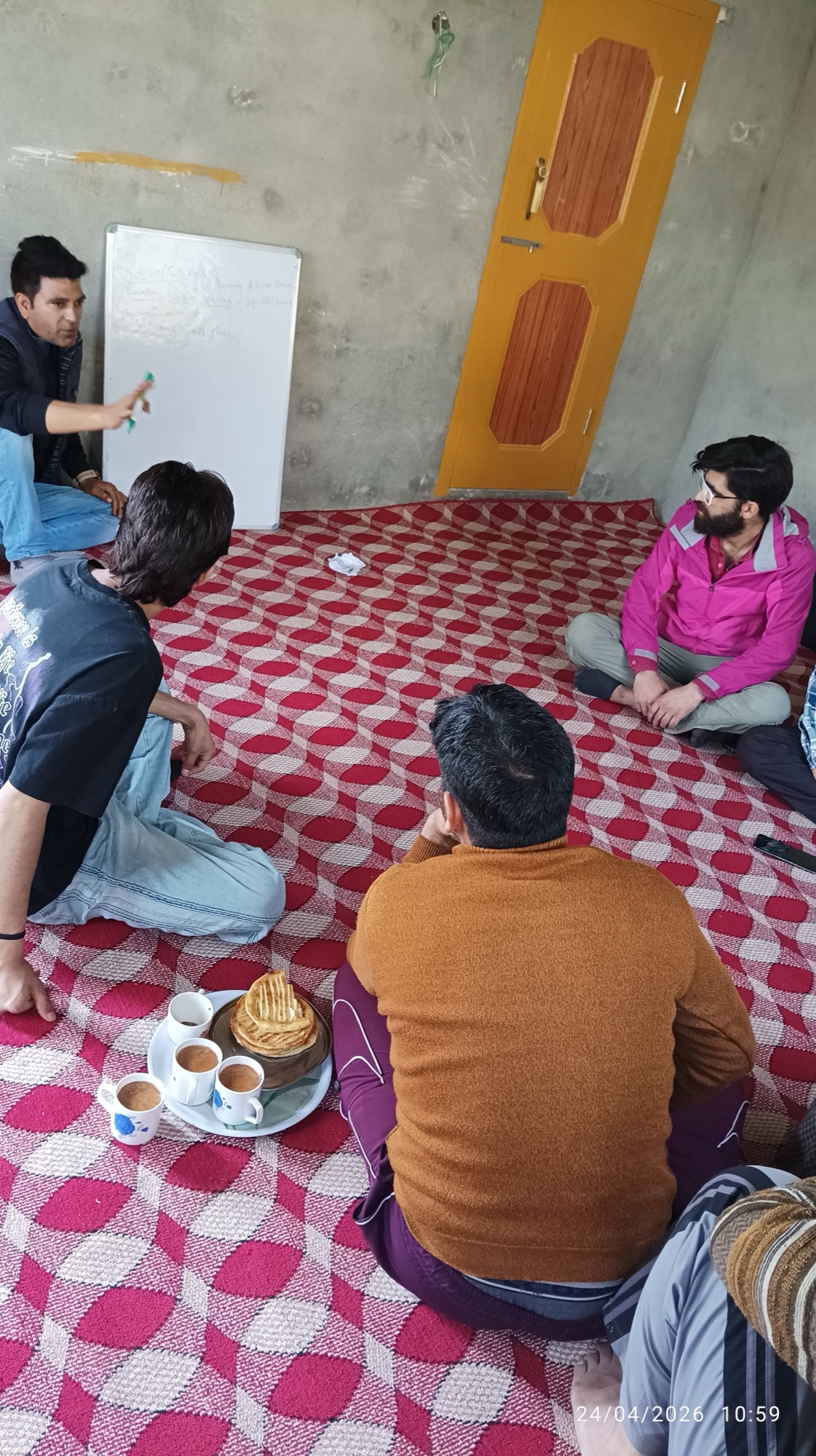
Every session begins with kahwa. Not because we worked that into a deck somewhere, but because if you arrive at a Kashmiri's home in the morning and don't accept what is offered, you have failed the visit before it begins. The chot kulcha is from the bakery across the lane. The cups are mismatched. The carpet is whatever the partner has at home, not a logoed branded thing.
We are not training partners on a software platform. We are sitting with them on their floor. The training is the second thing. The first is showing up.
What this scales to
We have done eight of these sessions in the last month, covering forty-seven partners across Repore, Tengpora, Bemina, Lal Bazar, and the lanes around Polo View. We will do twenty more before the monsoon. Each batch is trained on the same checklist, with the same kahwa, in the same sit-on-the-floor format. When we open the next city, the field-ops team will get on a bus.
If you are reading this from a metro and thinking it sounds inefficient — you are right. It is inefficient. It is also why HelpRush partners stay.
Most of the work of building a marketplace happens in code. A small, irreducible part of it happens on a carpet in a house in Repore on a Saturday morning, with eight cups of kahwa and a whiteboard. Both kinds of work are platform work. We've decided to be honest about that.
Keep reading
Field · 4 min read
Friday at Pratap Park.
Every Friday our field team leaves the office and goes to wherever Srinagar's tradesmen are. On 4 September that was Pratap Park, on the Bund beside the Jhelum, with plumbers, masons, carpenters and technicians from across the city. They sat on the grass, learned the app one screen at a time, and walked out with an ID round the neck and a card that books them. Notes from the lawn.
Provider · 4 min read
Three things that went home in a pocket.
An ID on a lanyard. A sheet of round black stickers. A card with a loop of green string. This is what a tradesman carried out of Pratap Park on Friday, and each one solves a different half of the same old problem: how a good plumber in Srinagar gets found, gets trusted, and gets called again. A closer look at the kit.